Trekking in Nepal as a Solo Female Traveler: What to Know Before You Go
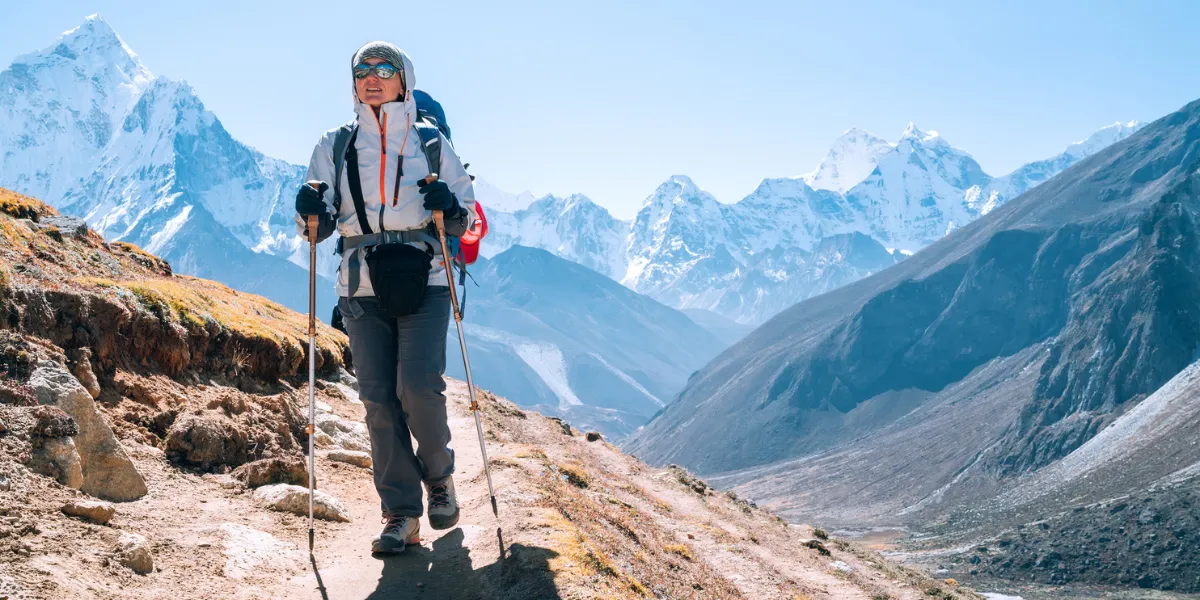
Most first-timers start with the EBC trek, where busy teahouse trails, regular flights and plenty of other walkers make a first Himalayan trip easier to manage. The sections below cover the rules, real costs, safety and what daily life on the trail looks like.
Key Takeaways
- A licensed guide is required on most trekking routes in Nepal since April 2023, and restricted areas such as Manaslu need at least two trekkers.
- The best seasons are March to May and late September to November.
- Budget roughly USD 1,300 to 2,000 for a guided two-week Everest region trek, not counting international flights.
- Higher teahouses have shared, squat-style toilets, so pack toilet paper and period supply you can carry out.
- Travel insurance must cover helicopter evacuation up to 6,000 metres.
Is Nepal Safe for Women Trekking Alone?
Nepal has a strong safety record for female trekkers, and serious crime on the main trails is rare. The real risks are altitude, cold and slips on steep, rocky paths, which is why planning matters more than worry.
Teahouse owners in the Everest and Annapurna regions are used to hosting women travelling alone. A growing number of licensed female guides also work out of Kathmandu, and most trekking companies can arrange one on request.
A few habits make solo trekking smoother:
- Share the full itinerary with someone at home and check in whenever there is wifi.
- Carry a small padlock, since many teahouse doors have a loop for one.
- Cover shoulders and knees in villages and monasteries.
- Keep enough Nepali rupees for the whole trek, as ATMs above Namche Bazaar are unreliable or missing.
Do You Need a Guide to Trek Solo in Nepal?
Since April 2023, foreign trekkers in Nepal’s national parks and conservation areas must hire a licensed guide. The Khumbu (Everest) local authority has set some of its own rules, and these have shifted, so confirm the current position when booking.
Restricted areas such as Manaslu need a special permit, a licensed guide and a minimum of two trekkers. Solo women heading there simply join a small group departure.
| Support | Typical daily cost | What it covers |
| Licensed guide | USD 30 to 35 | Route finding, permits, teahouse bookings, altitude checks |
| Porter | USD 25 to 30 | Carries up to around 20 kg of gear |
| Porter-guide | USD 30 to 35 | One person who carries a light load and guides |
Which Trek Suits a First-Time Solo Female Trekker?
The right trek depends on how much company, comfort and remoteness feels right for a first trip. The table compares four popular routes.
| Trek | Highest point | Days | Why it suits solo women |
| Everest Base Camp | 5,545 m (Kala Patthar) | 12 to 14 | Busiest trail, many teahouses, easy to meet other trekkers |
| Manaslu Circuit | 5,106 m (Larkya La) | 14 to 16 | Quieter villages, group departure required, strong local culture |
| Annapurna Circuit | 5,416 m (Thorong La) | 12 to 18 | Good teahouses, road access and several exit points |
| Gokyo Lakes | 5,357 m (Gokyo Ri) | 12 to 13 | Fewer crowds than Base Camp, glacial lakes and big views |
For a quieter route that still stays in the Everest region, the Gokyo Lake trek leaves the main valley for a chain of six turquoise lakes between 4,700 and 5,000 metres. The climb up Gokyo Ri at dawn gives a clear view across to Everest, Lhotse and Cho Oyu, with far fewer people on the summit than at Kala Patthar.
How Much Does a Solo Trek in Nepal Cost?
Trekking alone costs more than trekking in a pair, because the guide fee is not shared. Teahouse rooms are cheap, though, so the single supplement stays small.
| Item | Approximate cost |
| Kathmandu to Lukla return flight | USD 400 to 500 |
| Sagarmatha National Park permit | NPR 3,000 (about USD 22) |
| Khumbu municipality fee | NPR 3,000 (about USD 22) |
| Teahouse room | USD 5 to 15 per night |
| Meals | USD 25 to 40 per day, rising with altitude |
| Hot shower, wifi or charging | USD 3 to 6 each |
A guided 12-to-14-day Everest region trek for one person lands at roughly USD 1,300 to 2,000. Insurance with helicopter evacuation cover is extra and varies by provider.
What Is Teahouse Life Like for Women on the Trail?
Rooms are simple twin bedrooms with thin walls and no heating. Evenings are spent in a shared dining room around a stove, which is the easiest place to meet other trekkers.
Toilets are western-style in lower villages and turn into squat toilets higher up. A head torch, toilet paper and hand sanitizer make night trips far less stressful.
Showers run on solar or gas, and many trekkers stop showering above 4,000 metres to stay warm. Wet wipes and dry shampoo fill the gap.
How Do You Manage Your Period at Altitude?
Altitude, cold and a change in routine can shift the timing of a cycle, so it makes sense to pack supplies even if a period is not due. Bins are rare on the trail, and waste has to be carried out.
- A menstrual cup or period pants cut down on waste.
- Used pads or tampons can go in an opaque zip bag until the next proper bin.
- A hot water bottle inside the sleeping bag helps with cramps on cold nights.
- Anyone thinking about delaying a period for the trek should speak to a GP well before travel.
What Should Solo Women Pack for a Teahouse Trek?
Packing light matters, since every extra kilo either goes on your back or adds to porter costs. These items earn their place:
- Broken-in walking boots and two pairs of liner socks
- A down jacket and a sleeping bag rated to at least -10°C
- Thermal base layers and two sports bras
- A long skirt or loose trousers for villages and monasteries
- A buff or light scarf for dust and sun
- SPF 50 sunscreen and lip balm
- A filter bottle or purification tablets
- A small padlock and a power bank
When Is the Best Time to Trek in Nepal Alone?
Autumn, from late September to November, brings the clearest skies and the busiest trails. For a solo woman, busy trails are a plus, since there is always someone nearby.
Spring, from March to May, is warmer and brings rhododendrons into flower on the lower trails. Winter is cold and quiet with some teahouses shut, while the June to August monsoon means leeches, cloud and delayed Lukla flights.
Is a Solo Trek in Nepal Worth It?
A solo trek in Nepal gives women the freedom to walk at their own pace, while a guide and the teahouse network take care of the logistics. With the right season, a realistic budget and a few practical habits, a first Himalayan trek can feel less like a leap and more like the start of a habit.
By D.Mayville
Image credit Dreamstime.com