Fethiye Beyond the Beach: What to See and Do on the Turquoise Coast
On your first evening, walk along the harbour as the sun goes down behind the islands. For a few minutes the mountains behind the town turn a soft violet. That alone is usually enough to make people wish they had booked a few more nights.
Getting Here
Fethiye has no airport of its own. You will almost certainly fly into Dalaman, about an hour away by road. The drive takes you through pine forest and past the turn-off for Göcek before dropping down to the bay.
From the terminal you have three options.
The shuttle bus is the cheapest. It runs roughly in line with flight arrivals, but it stops at the main bus station just outside the centre. If you are staying in Çalış, Hisarönü or Ölüdeniz, you then need a dolmuş or a taxi for the last stretch, which is not much fun with suitcases late at night.
Taxis wait outside arrivals, but they are the most expensive way in.
A pre-booked Fethiye airport transfer costs less than a taxi and takes you straight to your door. It makes most sense for families, groups and anyone landing late, when the other options start to dry up.
Fethiye Town Deserves an Afternoon
A lot of visitors only see the town through a bus window on the way to the beach. Give it an afternoon. Fethiye is a working town with its own market, harbour and daily routine, and it feels nothing like the resort strip.
Start in Paspatur, the old bazaar. The lanes are narrow and shaded with vines, and between the leather shops and spice stalls there are small cafés where you can sit with a tea and watch the street go by. Then head down to the harbour promenade. In the early evening locals come out for a stroll and the gulets line up along the quay.
Above the town you will spot the Tomb of Amyntas, a Lycian tomb with a temple-style front carved straight into the rock more than two thousand years ago. The climb up the steps is short. Go just before sunset, when the view over the rooftops to the bay is at its best.
For dinner, go to the fish market. It confuses first-timers, so here is how it works. Pick your fish at one of the counters in the middle (sea bass and sea bream are the usual choices) and pay the fishmonger. Then sit down at one of the restaurants around the edge, which will cook it for a set fee per person. Mezes, salad and drinks are ordered separately from the restaurant. It is noisy and a little chaotic, and that is half the fun.
Out on the Water
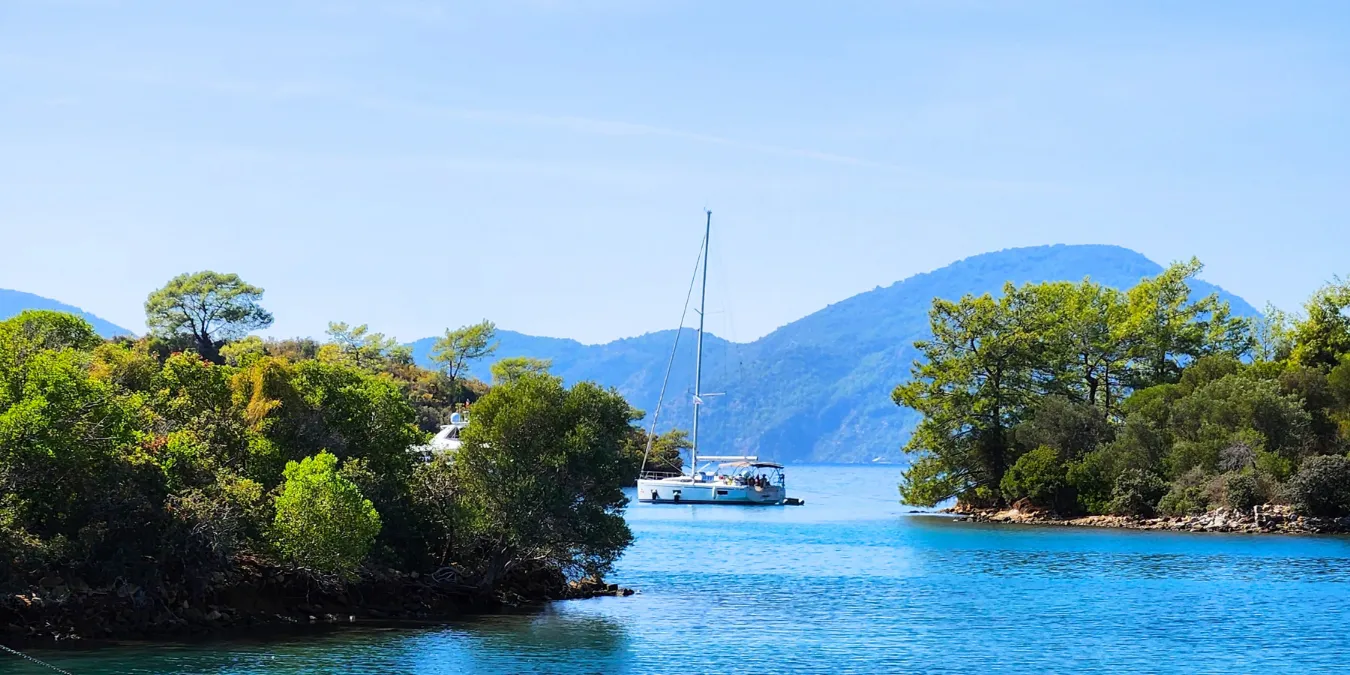
Fethiye Bay is sheltered, dotted with islands and remarkably clear. If you only book one thing, make it a day on a boat.
The 12 islands boat tour is the one most people do. Boats usually leave the harbour mid-morning and spend the day moving between islands and bays, stopping several times for a swim and a snorkel. The exact route depends on the boat and the weather, but you might pass through the shallow channels of the Yassıca Islands, climb around the Byzantine ruins on Tersane Island or swim in Aquarium Bay, where you can watch fish around your feet.
One tip: in July and August the best-known coves get crowded around midday, so ask the crew which order they visit the stops in before you board. Lunch is cooked on board, and between stops most people end up on the sundeck.
Inland and Along the Coast
After a beach day or two, it is worth getting out of town. There are plenty of day trips from Fethiye, and most of them do not mean a very early start or a long drive home.
Saklıkent Gorge is the one people talk about afterwards. The gorge cuts deep into the Akdağ mountains, and you wade upstream through cold, fast-flowing water between high rock walls. It stays cool inside even in August. Wear shoes you do not mind getting wet and expect to come out muddy.
Tlos is on the same road, so the two make an easy pair: the gorge in the morning, the ancient city after lunch. Tlos sits on a hilltop with a theatre, rock tombs and an acropolis, and it gets far fewer visitors than the big sites on the coast.
Kayaköy is just over the hill from Fethiye. Hundreds of stone houses stand roofless on the slopes, empty since the population exchange of 1923. Go in the late afternoon, walk up through the ruins as the light fades, then have dinner at one of the restaurants in the village below.
Butterfly Valley is reached by boat from Ölüdeniz. A small beach sits at the foot of steep cliffs, and a path leads up the valley to a waterfall. Take your swimming things.
If you are staying in Ölüdeniz and fancy something more adventurous, try tandem paragliding from Babadağ. You take off high on the mountain and glide down over the Blue Lagoon. You do not need any experience, as the pilot does the flying.
Dalyan needs a full day. A river boat takes you past the royal tombs cut into the cliff, on to the mud baths and finally to İztuzu Beach, where loggerhead turtles nest.
When to Visit
The season runs from May to October. July and August are hot, often well above 30 °C, and the popular spots get busy. If you can choose, come in late May, June, September or October. The sea stays warm well into autumn, the light is softer and walking round ruins in the afternoon is actually pleasant.
Spring is the time for hiking, especially sections of the Lycian Way, when the hills are green and full of wild flowers. Winter is quiet. Some places close for the season, but the town itself carries on as normal.
Good to Know Before You Go
- Cards are accepted in most restaurants and shops, but keep some Turkish lira for markets, small purchases and tips.
- On boat trips and at inland sites, bring reef-safe sun cream, a hat and more water than you think you will need.
- Dolmuş minibuses run cheaply and frequently between Fethiye and Ölüdeniz, Çalış, Hisarönü and other nearby areas.
- If you visit a mosque, cover your shoulders and knees.
Why People Come Back
Fethiye is easy to get to and easy to stay in, yet it never quite turns into a resort. Give it a day on the water and a day among the ruins, finish with dinner at the fish market, and you will understand why so many visitors keep coming back.
By D.Mayville
Image credit – Pexels