A Day Trip to the Cotswolds from London: Which Villages to Pick, and How to Get Between Them
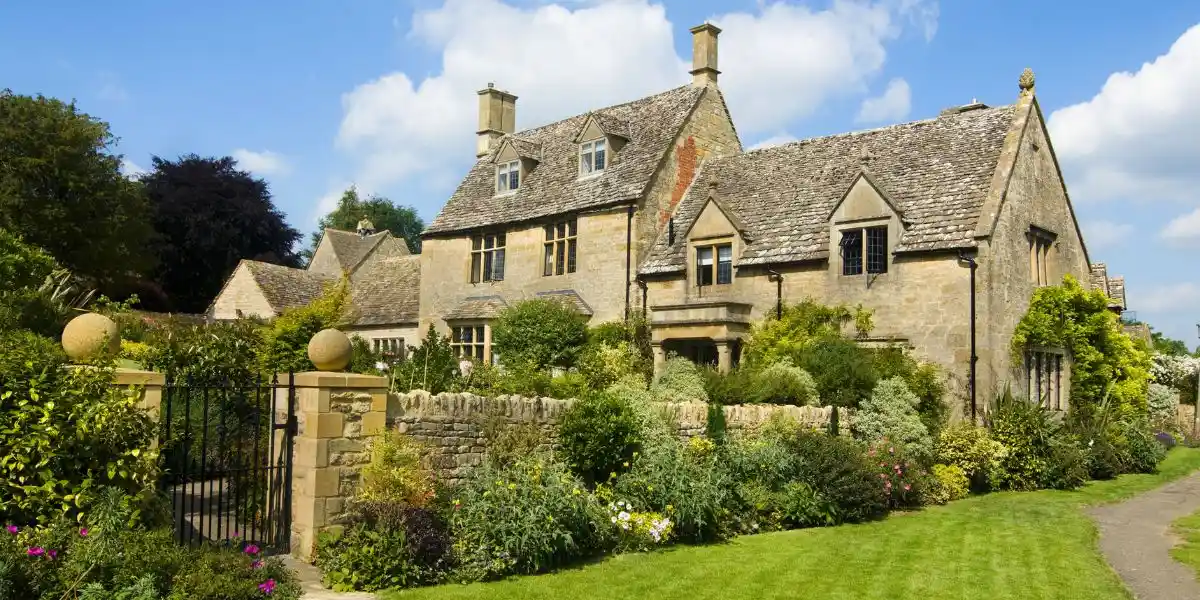
The less good news is that the villages are spread across five counties with no railway between them, so the day only works if you plan the moving-around part as carefully as the seeing part.
This guide is written for a first visit from London in a single day: which villages reward the drive, a route that fits in daylight, and an honest comparison of train, hire car and driver.
First, a reality check on distances
The Cotswolds Area of Outstanding Natural Beauty runs roughly 90 miles from Chipping Campden in the north to Bath in the south. Nobody sees it all in a day. The villages that get photographed most sit in a band between Burford and Broadway, and that band is where a day trip should stay.
From central London, allow around two hours by road to Burford in normal traffic, and two and a half to the northern villages such as Chipping Campden. Between villages, distances are short — ten to twenty minutes — but the roads are narrow, often single-track near the prettiest spots, and parking in high summer takes longer than the driving.
Four villages that justify the journey
Burford. The natural gateway if you are coming from London. One long high street runs downhill to a medieval bridge over the Windrush, lined with antique shops, tea rooms and the kind of pubs that have been serving travellers since the coaching days. Twenty minutes is enough to walk it; an hour if you stop for coffee.
Bibury. Arlington Row, the terrace of seventeenth-century weavers’ cottages beside the River Coln, is the single most-photographed scene in the Cotswolds and it really is that pretty. Go early. By late morning in summer the lane fills with coaches, and the small car park by the trout farm is full. There is little else to “do” in Bibury, which is rather the point: walk the river, cross the meadow, look back at the row.
Bourton-on-the-Water. The busiest village on this list, because the River Windrush runs right through the middle under a series of low stone bridges and children love it. The Model Village — a one-ninth scale replica of Bourton itself, in real Cotswold stone — is a genuine delight for families. If crowds bother you, arrive before ten or after four.
Stow-on-the-Wold. A market town rather than a village, set high on a hill with a big open square. It has the best choice of lunch spots of the four, and the north door of St Edward’s church, framed by two ancient yew trees, is worth the short detour. From Stow, the return road to London is straightforward.
If you have time in hand, Castle Combe (further south, near Bath) and Broadway with its hilltop tower (further north) are both wonderful — but adding either turns a comfortable day into a long one.
A route that fits in daylight
Leaving London between eight and nine in the morning:
- 10:30 – Burford.Walk the high street, pick up coffee.
- 11:15 – Bibury.Arlington Row and the river meadow, before the coaches.
- 12:30 – Bourton-on-the-Water.Lunch by the river; Model Village for families.
- 14:30 – Stow-on-the-Wold.The square, the church door, a last walk.
- 15:30 – set off back to London,arriving between six and seven.
That is four villages, roughly 200 miles of driving in total, and a day of nine to ten hours door to door. Cut Burford if you want more river time at Bourton; cut Bourton if you want quiet.
Train, hire car or driver: an honest comparison
By train. Great Western services from Paddington reach Kemble in about 75 minutes and Moreton-in-Marsh in about 90 — but both are the edges of the region, and from either station you still need a taxi or a bus to reach the villages above. Local buses exist and are cheap, but they are infrequent and do not link the four villages in a sensible order. The train works well if you want one destination for the day (Moreton-in-Marsh to Stow is a short taxi ride); it does not work for a four-village loop.
Hiring a car. The most flexible option and the cheapest per mile for a group, provided you are happy driving on the left along lanes with high stone walls on both sides, and provided you are prepared for the parking: the car parks in Bibury and Bourton are small and fill by mid-morning in summer. Factor in collecting and returning the car in London, which adds an hour at each end.
A private driver. For visitors who would rather not drive — and especially for families, older travellers and anyone flying in from abroad — a chauffeur-driven day trip removes the two biggest frictions: navigating the lanes and finding parking. You are collected at your hotel, dropped at each village while the driver waits, and returned in the evening. It costs more than a hire car, but the price is for the whole car rather than per person, so for three people it compares reasonably with a private tour. A typical full-day Cotswolds tour from London follows almost exactly the four-village route above, with the departure time chosen by you.
Practical notes
- Best months:May to early July for wildflowers and long evenings; September for softer light and thinner crowds. August is beautiful but busiest.
- Weekdays over weekends, A Tuesday in Bibury is a different place from a Saturday.
- Cash and cards:the small tea rooms and farm shops mostly take cards now, but a little cash is useful for honesty boxes and village car parks.
- Footwear:the river meadows and church paths are grass and stone; trainers are fine, heels are not.
- Dogs:most Cotswold pubs are dog-friendly, and Bourton in particular is full of them.
- Lunch:Stow and Bourton have the most choice. Bibury has one hotel and one café; do not plan a big lunch there.
If you would rather combine the Cotswolds with somewhere else
The Cotswolds pair naturally with Oxford (the northern villages are only 40 minutes from the city), and the southern edge of the region brushes Bath. A common two-day plan for London visitors is one day in the villages and a separate day for Stonehenge and Bath, which sit south-west of the Cotswolds on a different road out of London. Trying to squeeze Stonehenge into a Cotswolds day is a mistake most people make once.
The short version
Stay in the Burford–Stow band, go on a weekday, arrive in Bibury before eleven, and decide before you leave London how you are going to get between the villages — because that decision, more than any other, is what makes a Cotswolds day trip feel relaxed rather than rushed.
By C. Leonov
Image from Dreamstime