The History and Meaning Behind Italy’s Most Famous Carnival Masks
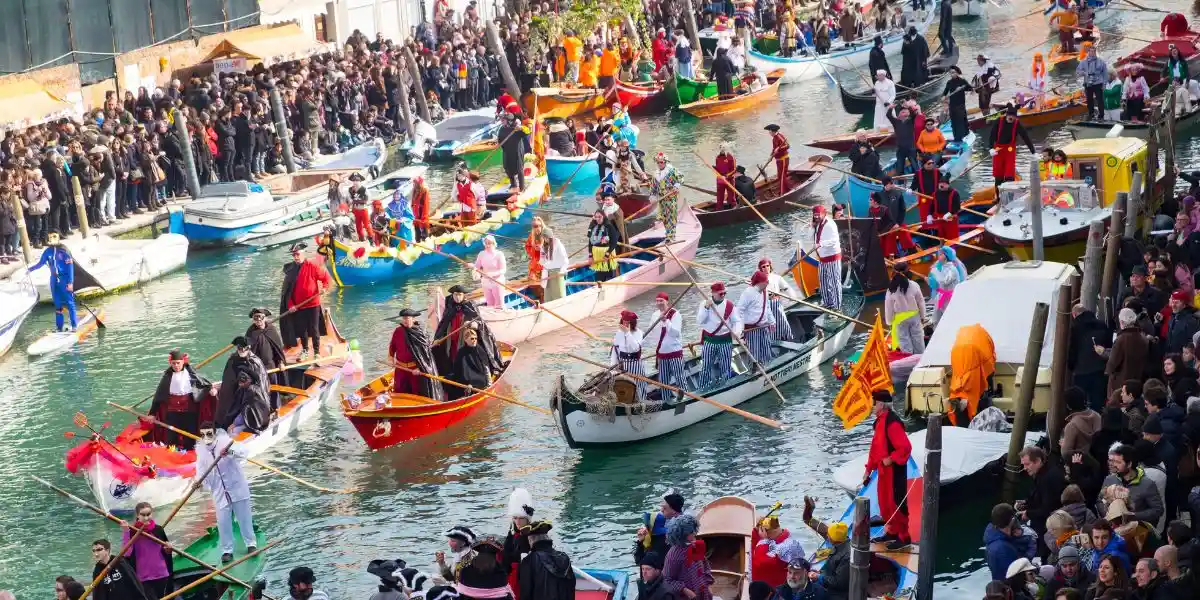
For centuries, they helped people step outside ordinary social roles, move through crowded streets anonymously, and take part in celebrations where identity could become deliberately blurred.
Venetian Masks became symbols of freedom, performance, elegance, and social experimentation, all wrapped into a single object worn over the face. Today, they are still admired for their craftsmanship and dramatic beauty. Behind the feathers, gold leaf, and painted details is a story shaped by politics, class, theatre, and the unusual culture of one of Europe’s most distinctive cities.
A Tradition That Grew With the City
Venice was unlike most European cities. Built across a lagoon and shaped by trade, diplomacy, and commerce, it developed a strong culture of public celebration. Masks gradually became part of that social world, especially during Carnival, when people filled streets, squares, theatres, and private gatherings.
Their popularity was not only about looking impressive. Covering the face created temporary distance from everyday identity. A merchant, noble, visitor, or ordinary citizen could move through the same festive spaces with fewer visible clues about status.
That anonymity made Carnival feel different from ordinary life, where social roles were usually much more visible.
Anonymity Changed the Social Experience
Clothing once revealed a great deal about social position, profession, and wealth. A mask complicated that visual language. When facial features were hidden and clothing was carefully chosen, it became harder to know immediately who stood behind the disguise.
People could speak with someone they might not normally approach, observe a crowd without being recognized, or enjoy the simple thrill of being temporarily difficult to identify.
Anonymity also worried authorities. Rules were introduced at different times to control when masks could be worn and where masked people were permitted to go. Their popularity remained strong because they offered something ordinary clothing could not, a brief escape from a fixed public identity.
Carnival Turned Masking Into Spectacle
Carnival transformed the city into a stage. Music, performances, costumes, food, dancing, and elaborate gatherings brought together residents and visitors in an atmosphere designed around celebration.
Masks suited that environment because they added instant visual drama. A person could enter wearing a striking face covering and immediately become part of the spectacle.
The streets themselves became theatrical. Familiar people appeared unfamiliar, strangers looked like characters, and the boundary between audience and performer became less obvious. That quality still explains much of their appeal today.
Different Designs Carried Different Personalities
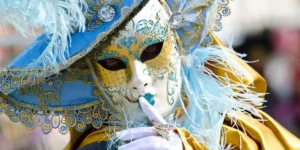
The traditional styles associated with Venice were not all alike. Some covered the whole face, while others left the mouth exposed. Certain shapes looked elegant and restrained, while others were deliberately dramatic.
The Bauta became known for a distinctive lower section that projected outward, helping the wearer speak and eat without removing it. The Colombina style generally covered only the upper part of the face and later became especially popular for decorative designs.
The long-beaked Plague Doctor shape has a darker history. Its form came from protective clothing associated with physicians during disease outbreaks, although it later became absorbed into Carnival imagery. These different forms gave wearers choices about how mysterious, decorative, theatrical, or unsettling they wanted to appear.
Craftsmanship Became Part of the Attraction
A well-made carnival mask can feel more like a small piece of art than a costume accessory. Traditional craftsmanship often involves shaping a lightweight base, smoothing the surface, painting by hand, and adding decorative details.
Gold leaf, lace, feathers, crystals, raised patterns, and painted flourishes can transform a simple form into something highly individual. That hand-finished quality still attracts collectors and event guests.
Choosing one can become personal. Some people prefer restrained black and gold styles, while others want elaborate decoration that catches attention from across the room.
Theatre Helped Shape the Visual Language
Italian theatre also influenced the style and cultural meaning of masks. Commedia dell’arte, a theatrical tradition built around recognizable stock characters, relied heavily on exaggerated expressions, costumes, and face coverings.
Audiences could identify certain personalities immediately through appearance. A mask helped communicate character before a performer had spoken a word.
That connection remains easy to understand today. A sharp design can feel mischievous or intimidating, while a delicate eye mask may suggest elegance or romance. Even outside theatre, people use masks to create a temporary character.
Their Meaning Changed as History Changed
The tradition did not continue in exactly the same form forever. Political change altered public customs, and periods of restriction affected Carnival and masking.
Over time, interest in the city’s historic celebrations returned. The modern revival of Carnival brought elaborate costumes and traditional mask-making back into public view, attracting visitors worldwide.
Today, the masks are historical objects, souvenirs, fashion accessories, works of craftsmanship, and symbols of celebration. Someone can appreciate one for its history or wear one because its design feels beautiful and dramatic.
Why the Fascination Still Lasts
Most accessories are meant to show something about the person wearing them. These masks do something more interesting, they reveal and conceal at the same time.
A decorative design may express taste, confidence, humor, romance, or theatrical flair while hiding the feature people usually rely on most, the face. That contradiction creates intrigue.
It also explains why these masks remain popular at weddings, masquerade balls, costume parties, photography sessions, and themed events. They offer an easy way to introduce history and fantasy into a modern setting.
Their appeal is not simply nostalgia. It comes from the same idea that fascinated people centuries ago, the pleasure of stepping briefly outside an ordinary identity and becoming a little harder to read.
A Tradition That Still Feels Alive
The most interesting thing about these famous carnival masks is that they never feel like museum pieces when they are actually worn. Once tied in place, they immediately become social objects again, encouraging curiosity, photographs, conversation, and play.
Their history includes glamour, theatre, craftsmanship, social rules, and a desire for anonymity, giving them far more depth than a simple accessory.
Choosing one can therefore feel more meaningful. A lace-covered eye mask or ornate gold design can connect a modern celebration with centuries of performance and imagination.
Perhaps that is why the tradition remains so appealing. The world has changed dramatically since masked figures first filled the streets of Venice, but the pleasure of transformation has not. For one evening, a familiar face can disappear behind art, history, and mystery, and that small transformation can make an occasion feel unforgettable.
By J Nenad
Images – dreamstime