Entertainment in Travel Then and Now – From Televisions to Mobile Gaming

However, the journey itself, whether traversing vast oceans on ocean liners, crossing continents by rail, or sitting in high-altitude airplane cabins, has historically presented a unique challenge regarding how passengers occupy their time. Decades ago, long-distance transit was characterized by a distinct sense of isolation and limited choices, where passengers relied almost exclusively on physical media, basic communal broadcasts, or simple observation of passing scenery.
As technology accelerated throughout the late twentieth and early twenty-first centuries, the paradigm shifted dramatically from passive, shared entertainment experiences to highly personalized, interactive, and instantly accessible digital media tailored to individual preferences.
In the mid-to-late twentieth century, in-flight and transit entertainment represented a shared, communal event that brought travelers together under a single, unified experience. Airplanes featured large overhead projection screens positioned at the front of the cabin, displaying a single film for every passenger aboard, while long-distance trains offered shared lounge cars equipped with static television sets or scheduled radio broadcasts. These early attempts at passenger engagement were severely constrained by technical limitations, heavy hardware requirements, and a complete lack of individual choice or control over playback. Passengers had no alternative but to adapt their schedules to the broadcast, turning the journey into a collective waiting room where everyone consumed the exact same content regardless of their personal tastes, age, or background.
The turn of the millennium marked the beginning of a profound revolution in mobile entertainment technology, transitioning from bulky physical media like paperbacks, portable CD players, and handheld consoles to all-in-one digital devices. With the rapid proliferation of smartphones, tablets, and high-speed wireless connectivity, modern travelers now possess an unlimited library of media right in the palm of their hands, completely transforming the subjective perception of travel time. Today’s passengers can easily download entire seasons of television shows, access expansive music libraries, or engage in casual gaming sessions without needing specialized equipment or physical storage space. The modern digital ecosystem allows travelers to effortlessly transition between different entertainment formats depending on their mood, providing unprecedented freedom and autonomy during long transit periods.
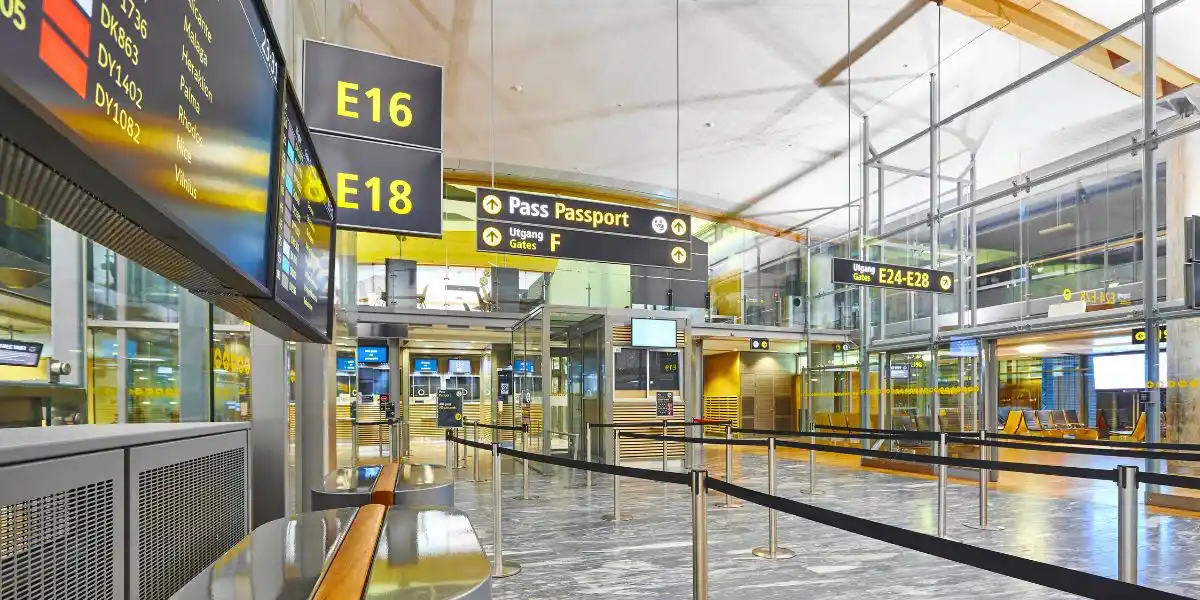
For many contemporary travelers, the availability of instant, low-friction digital entertainment plays a vital role in alleviating the monotony and stress often associated with long-distance journeys. Modern gaming platforms and interactive applications have adapted to this need by eliminating traditional barriers to entry, enabling users to jump straight into immersive gameplay experiences without undergoing lengthy registration processes or downloading heavy files. Whether waiting at a crowded departure gate or sitting on a delayed train, many passengers turn to quick-access gaming portals where they can play online slots without signing up to enjoy immediate, engaging entertainment on their mobile browsers. This shift toward instant, frictionless digital experiences reflects a broader trend in travel culture, where convenience, speed, and personalized engagement are paramount.
The seamless integration of modern personal technology into transit environments has ultimately redefined the travel experience from a period of passive endurance to an opportunity for active engagement and relaxation. Transport operators have responded by equipping modern aircraft, buses, and trains with high-output USB charging ports, seatback device holders, and satellite Wi-Fi networks designed specifically to support personal device usage. As a result, the journey is no longer viewed merely as a necessary hardship between departure and arrival, but rather as an extension of one’s personal leisure time, where individual digital habits continue uninterrupted across international borders and time zones.
The Golden Era of Communal Media and Physical Travel Companions
To appreciate the scale of modern digital convenience, one must examine the landscape of travel entertainment that defined previous generations. Throughout the 1960s, 1970s, and 1980s, the options available to long-distance travelers were strictly bounded by physical weight and spatial constraints. Packing for a major trip meant carefully selecting a finite number of paperback novels, magazines, or crosswords, as every additional item added tangible weight to one’s luggage. For families traveling with children, keeping young passengers occupied involved physical board games with magnetic pieces, coloring books, and interactive verbal road-trip games, all of which required physical space, organization, and patience.
When broadcast technology first entered the transportation sector, it did so under a strictly centralized, communal framework that offered zero personalization. Airlines installed massive 16mm movie projectors that beamed a single feature film onto a large bulkhead screen, accompanied by basic pneumatic headsets that plugged into armrest audio jacks. Passengers had no ability to pause, rewind, or select alternative content, meaning that if a traveler disliked the scheduled movie, their options were limited to closing their eyes or returning to their physical books. Trains and long-haul buses operated under similar constraints, occasionally featuring small CRT television monitors mounted in ceiling racks that broadcast recorded video cassettes on a fixed loop for the entire carriage.
- Centralized Overhead Projection: Single-screen cabin displays that forced all passengers to watch the same predetermined film regardless of age or personal interest.
- Physical Media Dependability: Heavy reliance on printed paperbacks, physical newspapers, audio cassettes, and magnetic travel games that consumed valuable luggage space.
- Pneumatic Audio Systems: Early airline audio delivery systems utilizing hollow plastic tubes that delivered low-fidelity sound through basic armrest connections.
- Fixed Scheduled Programming: Complete absence of on-demand playback capabilities, requiring travelers to synchronize their rest schedules with static media broadcasts.
The transition toward individual choice began in the 1990s with the introduction of personal seatback monitors in premium aircraft cabins and the widespread adoption of portable electronic devices like the Sony Walkman and Game Boy. Dr. Eleanor Vance, a prominent media historian and travel culture researcher, highlights the psychological significance of this shift: “The evolution of travel entertainment represents a gradual reclaiming of personal agency within constrained environments. In the past, travel forced individuals into a passive, shared state where time was felt acutely because external distraction was limited and static. The advent of personal media devices effectively privatized the passenger space, allowing individuals to construct their own micro-environments and psychologically detach themselves from the physical confinement of transit.”
The Rise of Seatback Systems and the Personal Media Ecosystem
The late 1990s and early 2000s witnessed the golden age of integrated In-Flight Entertainment (IFE) systems, which brought individual touchscreens and multi-channel audio directly to every seat in commercial aircraft. These systems revolutionized long-haul aviation by offering passengers a choice between dozen—and eventually hundreds—of movies, television episodes, audio albums, and basic interactive video games like digital chess or trivia. For the first time in aviation history, travelers could curate their own entertainment schedule, pausing a movie for meal service or switching to a real-time flight tracking map to monitor their geographical progress across continents.
However, despite their immense popularity, built-in seatback systems faced inherent challenges related to rapid technological obsolescence, excessive hardware weight, and high maintenance costs. The rapid development of consumer smartphones and tablets quickly outpaced the multi-year hardware development cycles of aviation engineering, leading to a disparity where passengers carried handheld devices featuring significantly sharper displays, faster processors, and superior user interfaces than the screens built into their seats. Consequently, transportation providers began shifting their focus toward hybrid models, offering high-speed satellite Wi-Fi networks and local wireless streaming servers that allow passengers to stream content directly onto their personal smartphones, tablets, and laptops.
Mobile Gaming and the Era of On Demand Instant Engagement
In the contemporary landscape, mobile gaming has emerged as one of the most dominant and versatile forms of travel entertainment, capturing the attention of millions of passengers worldwide. Unlike traditional video games that required dedicated gaming consoles, heavy cartridges, and complex setup procedures, modern mobile games are designed for immediate accessibility, intuitive touch controls, and flexible play sessions. Passengers can engage in casual puzzle games, complex strategy titles, or digital casino simulations whether they have five minutes during a layover or five hours on an oceanic flight. This adaptability makes mobile gaming an ideal companion for navigating the unpredictable timelines and idle periods inherent to modern transit.
- Zero Hardware Friction: Elimination of specialized gaming consoles, allowing travelers to play high-quality games directly on their primary everyday smartphones.
- Diverse Gameplay Lengths: Flexibility to engage in brief two-minute casual sessions during boarding or multi-hour immersive storylines during long flights.
- Offline Capability Options: Availability of offline playable titles that operate seamlessly without requiring an active cellular or satellite internet connection.
- Cross-Platform Synchronization: Seamless cloud saving that enables travelers to pause a game on a tablet and resume progress on a smartphone later.
Furthermore, the integration of advanced cloud computing, HTML5 web architecture, and high-speed in-transit Wi-Fi has expanded the horizons of mobile gaming beyond downloaded applications. Travelers can now access sophisticated web-based gaming portals directly through mobile browsers, bypassing time-consuming installation processes and storage management entirely. This instant-play capability is particularly advantageous in travel scenarios where internet bandwidth may be metered or intermittent, as lightweight web applications require minimal data to launch and operate smoothly. The ability to access instant entertainment on demand ensures that passengers always have a reliable, low-maintenance distraction at their fingertips regardless of their location.
Connectivity, Streaming, and the Future of In Transit Experiences
Looking ahead, the line between living room entertainment and in-transit leisure is poised to dissolve completely as next-generation satellite constellations and ultra-low-latency wireless networks become standard across global transport fleets. Modern satellite connectivity allows passengers to stream high-definition video directly from their personal subscription accounts, participate in live multiplayer gaming tournaments, or conduct video calls while traveling at nine hundred kilometers per hour. The travel environment is no longer a media desert or a disconnected vacuum, but rather a fully integrated node within the global digital network.
Simultaneously, emerging technologies such as augmented reality (AR) and virtual reality (VR) headsets are beginning to offer a glimpse into the next frontier of passenger engagement. Spatial computing devices can transform a cramped economy seat into a virtual private movie theater, a peaceful beach resort, or a spacious digital workspace, completely masking the physical limitations of the surrounding cabin. As these technologies become lighter, more comfortable, and more affordable, they will further empower travelers to tailor their sensory environments according to their exact desires, ensuring that the age-old problem of travel boredom remains a relic of the past.
By E Igaune
Photostock from Dreamstime.com