Summer holiday warning: Do you know where Brits could face the longest EES queues this summer?
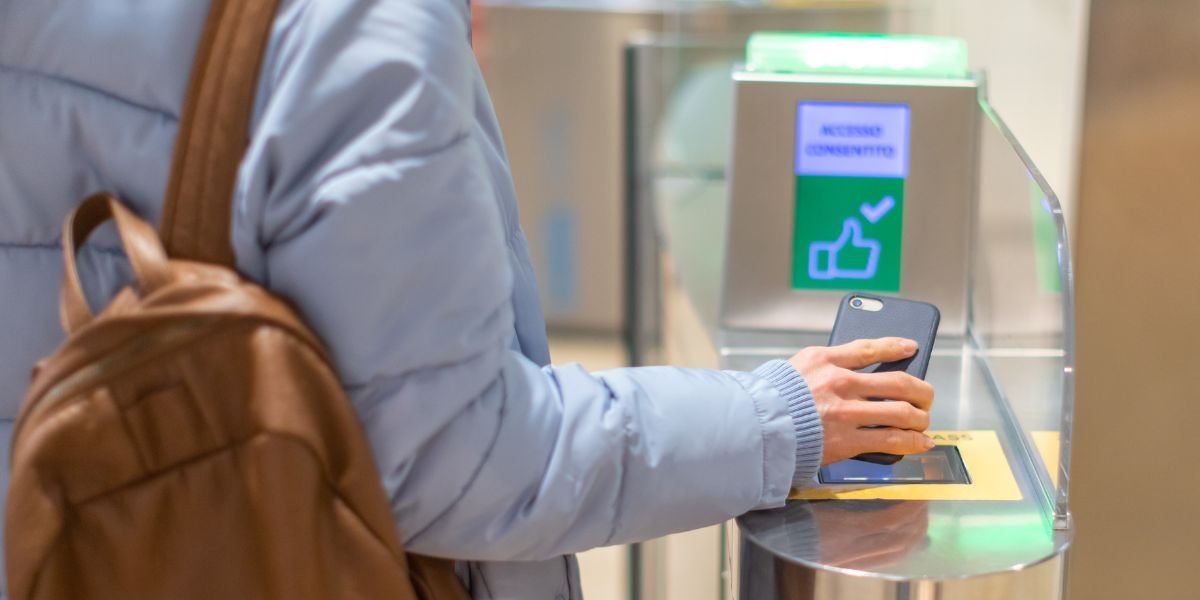
With the EU’s new Entry-Exit System introducing biometric checks for British passport holders, there have already been warnings that queues at some European airports could become significantly longer..
Thankfully, someone has done the number-crunching for us. Online tour operator Exoticca.com has analysed UK Civil Aviation Authority passenger data to identify the Schengen airports most frequently used by British travellers during the busy summer months.
The results reveal where the largest numbers of UK passengers will be travelling between June and August, highlighting the airports where increased border checks could potentially have the biggest impact. Perhaps unsurprisingly, Spain dominates the list, with Palma de Mallorca, Alicante, Malaga and Barcelona all appearing among the five busiest destinations.
This does not mean that we need to rethink our summer holidays, but it does offer a useful reminder to plan ahead. Knowing where the greatest pressure points may be could help us to know if we need to leave more time or avoid overly ambitious connections (story of my life!)
By Airport
Across June, July and August, UK airports handled 43.8 million passengers travelling to and from Schengen-area destinations where non-EU travellers may need to complete EES checks.
Palma de Mallorca ranks first, with 2,755,331 passengers travelling between the UK and the Spanish island during the summer months. This accounts for 6.3% of all UK airport passengers travelling to and from Schengen destinations in the period analysed. Manchester recorded the highest number of passengers to and from Palma, followed by Gatwick and Bristol.
Amsterdam follows in second place, with 2,183,886 UK airport passengers across June to August. Heathrow is the biggest UK airport for passengers travelling to or from Amsterdam, ahead of Manchester and Edinburgh, underlining the pressure likely to be felt on one of Europe’s busiest hub routes.
Alicante ranks third, with 2,051,429 UK airport passengers during summer. Manchester, Gatwick and Stansted handle the largest volumes on this route, showing how demand for Spanish coastal holidays is spread across several of the UK’s biggest airports.
Malaga places fourth, with 2,010,933 passengers travelling between UK airports and the Costa del Sol gateway. Gatwick records the highest passenger volume on this route, followed by Manchester and Stansted.
Barcelona completes the top five, with 1,425,668 UK airport passengers. Gatwick, Heathrow and Manchester are the three busiest UK airports for travellers heading to or from the Catalan capital.
Paris Charles de Gaulle ranks sixth, with 1,140,661 passengers travelling between the UK and the French hub, while Ibiza places seventh with 973,012 passengers. Both are likely to see strong summer demand from UK travellers, whether for city breaks, onward connections or peak-season holidays.
Greek holiday airports also appear prominently in the ranking, with Rhodes and Corfu placing eighth (839,644 passengers) and ninth (834,865) respectively. For both destinations, Gatwick, Manchester and Birmingham are the three biggest UK airports by passenger volume.
Madrid completes the top ten, with 833,465 UK airport passengers during the summer months. Heathrow accounts for the largest share of passengers travelling to and from Madrid, followed by Gatwick and Stansted.
Traffic by Country
Spain is by far the most visited Schengen country for UK airport passengers in summer, with 12,509,304 passengers travelling between UK and Spanish airports from June to August. That means Spain alone accounts for 28.5% of all UK-to-Schengen airport passengers during the summer months.
This also explains why Spanish airports dominate the airport ranking, with Palma de Mallorca, Alicante, Malaga, Barcelona, Ibiza and Madrid all appearing among the busiest summer routes for UK travellers. With so many British holidaymakers concentrated across Spain’s airports, even small delays at border control could quickly affect large numbers of passengers.
Greece ranks second, with 5,420,827 UK airport passengers across the summer months. Rhodes and Corfu both feature in the airport top ten, while Heraklion, Athens, Zakynthos, Kos, Chania and Santorini also attract strong summer traffic from the UK.
Italy follows in third place, with 5,156,852 passengers travelling between UK and Italian airports from June to August. Although no Italian airport appears in the overall top ten, the country sees high volumes spread across multiple destinations, including Rome Fiumicino, Milan Malpensa, Naples, Venice, Pisa and Catania.
France ranks fourth, with 3,686,772 UK airport passengers over summer. Paris Charles de Gaulle is the country’s busiest individual airport for UK travellers, but Nice, Marseille, Bordeaux and Toulouse also see significant summer demand.
Germany completes the top five, with 3,180,872 passengers travelling between UK and German airports. Frankfurt Main is the country’s busiest entry point for UK airport passengers, followed by Berlin Brandenburg and Munich, showing that business and city-break routes could also feel the impact of EES delays alongside traditional holiday destinations.
The Netherlands ranks sixth, with 2,335,645 UK airport passengers, driven heavily by Amsterdam, which is the second-busiest Schengen airport for UK travellers overall. Poland follows in seventh with 2,088,975 passengers, while Switzerland, Croatia and Romania complete the top ten.
Together, the top three countries – Spain, Greece and Italy – account for more than 23 million UK airport passengers during the summer months. This shows that the biggest pressure points for British travellers are likely to be classic holiday destinations, especially where high passenger volumes meet seasonal airport peaks.
The data also shows that summer is heavily driven by British travellers. Across June, July and August 2025, British nationals accounted for 25.2 million of 42.2 million monthly passenger arrivals in the UK, equal to 59.8% of arrivals during the period.
A spokesperson at Exoticca.com commented on the findings: “Spain is always going to be huge for Brits in the summer, but these numbers show just how much pressure a few airports could be under. Palma, Alicante, Malaga, Barcelona and Ibiza are not just popular – they are doing a lot of the heavy lifting for UK holiday traffic.
“For most people, this is their main holiday of the year. They have booked the flights, sorted the hotel, packed the kids’ bags or planned the group trip, and the last thing they want is to lose half a day standing in a border queue.
“The main thing is not to travel like it is any other summer. Give yourself more time, especially on the way back from Europe, and be a bit careful with tight connections or anything that relies on everything running perfectly.
“It is also worth having the boring bits ready before you get to the front of the queue – where you are staying, when you are flying home, and anything else you might need to show. It is not exciting, but it is much better than digging through emails while everyone behind you is getting impatient.
“No one is saying people should avoid Europe. Spain, Greece, Italy and France will still be packed with Brits this summer because they are popular for a reason. It is more a case of accepting the airport might be the least relaxing part of the trip and planning around that.”
The 29 countries that require non-EU nationals, such as Britons, to register their biometric data and entry information include Austria, Belgium, Bulgaria, Croatia, Czechia, Denmark, Estonia, Finland, France, Germany, Greece, Hungary, Iceland, Italy, Latvia, Liechtenstein, Lithuania, Luxembourg, Malta, Netherlands, Norway, Poland, Portugal, Romania, Slovakia, Slovenia, Spain, Sweden and Switzerland. These constitute the Schengen area.
Since the UK left the European Union in 2020, British nationals have been allowed to stay in the Schengen area for up to 90 days in any 180-day period. EES is intended to replace manual passport stamping and more accurately track stays by non-EU travellers.
From the Newsdesk
Image credit – Dreamstime, Content supplied