Which Sporting Event Experience Suits Your Travel Style
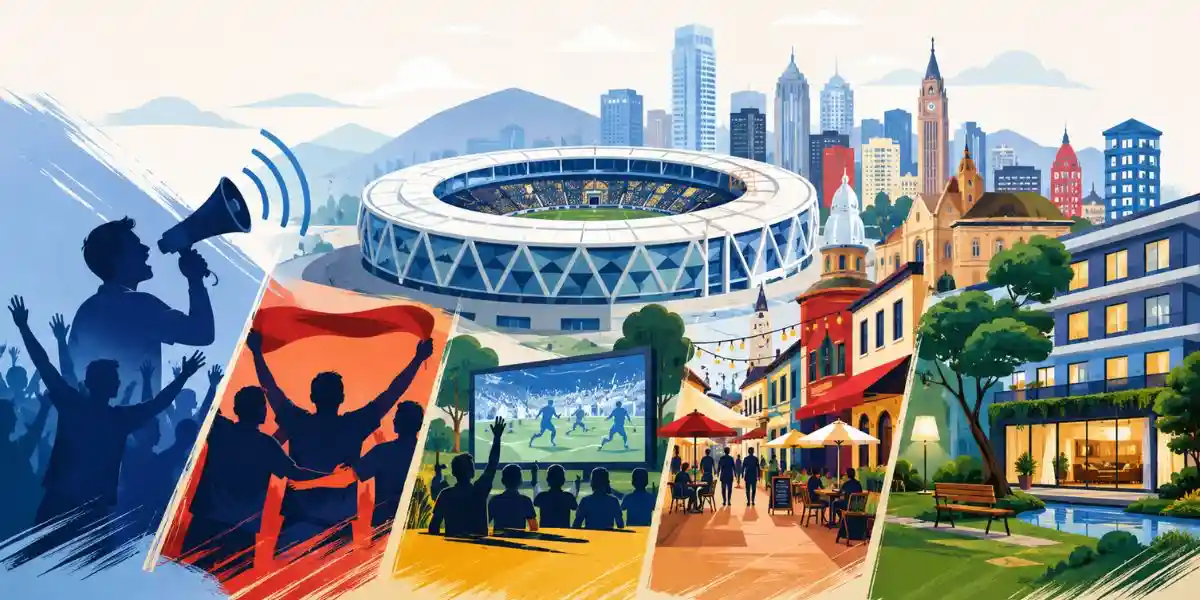
One traveller wants constant chanting, packed public squares, and strangers discussing every match or contest. Another wants one intense stadium day followed by good food, museums, and a quiet hotel. “Best atmosphere” therefore means very little until you separate the experience into parts. Choose the crowd first: decide how much noise, closeness, public viewing, and recovery time you actually enjoy, then assess cities against those preferences.
Crowd density alone does not explain whether an event feels exciting or exhausting. PLOS One research on crowd identification and emotion examined an outdoor music event and a public demonstration and found that people who identified more strongly with the surrounding crowd tended to report more positive emotions and, in one study, felt less crowded. For a sports traveller, that suggests that the atmosphere partly depends on a sense of belonging. A dense gathering of supporters who share your mood may feel communal, while the same physical squeeze among detached spectators may feel tiring.
Prediction Talk Is Part of the Crowd
Chants and shirts are the obvious signs of fan culture, but much of the social energy comes from small conversations. Before choosing a city, think about whether you enjoy joining those exchanges or prefer to watch from a little distance.
Prediction talk usually takes four forms: who will win, what the score pattern might be, which player or moment could shift the match, and how the contest changes once play begins. Someone comparing these formats can look at the Sports route on Lucky Rebel, a broad sportsbook-and-casino homepage that separates pre-match from live formats. The useful distinction is between a view formed before kick-off and a reaction shaped by events on the pitch.
Lucky Rebel provides a concrete example of how those conversation subjects are divided, but the crowd itself supplies the character. One venue may be full of score predictions, playful disagreements, and instant reactions, while another may be driven mainly by songs, flags, or local loyalties. None of these patterns makes one city universally better. They simply reveal what kind of social participation a traveller may encounter.
A short set of fan interviews from the recent World Cup illustrates the mix without proving anything about a nation or host city. Supporters discuss repeated attendance, chanting, visible styling, shifting allegiances, and match expectations.

Build a Five-Layer Atmosphere Profile
Instead of accepting a single atmosphere score, test each possible base against 5 separate layers.
- Shared sound: Will you hear organised chanting and singing, or mainly reactions to major moments?
- Crowd identification: Are you likely to feel part of the gathering? Your team, companions, language comfort, and appetite for conversation matter as much as size.
- Public-viewing network: Is the experience concentrated inside the stadium, spread across official fan zones, or carried by smaller venues? Check hours, booking rules, and late transport.
- Sport-to-city continuity: Does match energy continue into neighbourhoods, food areas, and cultural spaces, or disappear once you leave the venue? Look for local programmes.
- Recovery space: Can you stay away from the largest crowds, reach calmer attractions, and return easily after an intense matchday? This matters when you enjoy the sport in smaller doses.
Answering those questions creates a personal profile. A social group might favour a compact public-viewing network and city-centre continuity. A solo traveller may value communal spaces and simple routes to quieter accommodation. Mixed-interest groups may prefer games that are visible without taking over every day. That balance can matter more than the headline size of any official gathering.
Check Whether the Event Belongs to the Place
A memorable sports trip needs a destination that remains interesting between fixtures. A Scientific Reports study of the 2025 Wuxi Marathon found that environmental perception, activity evaluation, and cultural identification were among the factors connecting the event scenario with emotional responses to the city. It supports a practical question: does the event help you engage with the place, or could the same fan experience have been dropped anywhere?
Look beyond branded gathering spaces. Check whether local food, music, history, and neighbourhood life appear in the event programme, and whether visitors can experience them without crossing the city repeatedly. A strong connection gives non-match days a clear shape, and helps companions with different interests enjoy the trip.
Leave Space for the Trip You Actually Want
The right sporting city is not necessarily the loudest one. It is the place where shared sound, crowd belonging, viewing options, local character, and downtime combine in proportions you can enjoy for several days. Rank those five layers before comparing destinations. You may find that the city advertised as less intense offers the better trip because it gives you control over when to enter the crowd and when to step away.
By A Bailey
Image credit Ken Poon