How to Travel Europe on $40 a Day: Verified 2026 Budget Tactics
I spent the last decade deconstructing these financial leaks. My data proves that any disciplined traveller can slash that $4,500 figure by 60% without sleeping in a ditch. Successful budget travel requires surgical precision and a refusal to follow the herd toward overpriced capitals.
The Madison, WI Departure Strategy
Leaving a mid-sized hub like Madison, WI often creates an immediate financial hurdle. Direct flights from Dane County Regional Airport to Europe rarely exist. Most residents reflexively book a legacy carrier through Chicago or Detroit. This move frequently costs an extra $400. I recommend a different path. Buy a separate, low-cost domestic ticket to New York JFK or Boston Logan. Use these East Coast gateways to access deep-discount carriers like Icelandair or French Bee. In February 2026, a round-trip from MSN to Brussels via a self-transfer through ORD or JFK often hits the $499 mark. Booking this same route as a single ticket through a major airline routinely spikes to $900.
Destination Arbitrage: Albania and Poland
Geography dictates 80% of your expenses. Paris and Zurich destroy bank accounts. Tirana and Krakow offer the same architectural grandeur and historical depth for a fraction of the cost. Albania currently stands as the greatest value proposition in the Mediterranean. While tourists in Greece pay $200 per night for a seaside view, Albanian Riviera towns like Himare or Saranda provide the same turquoise water for $45.
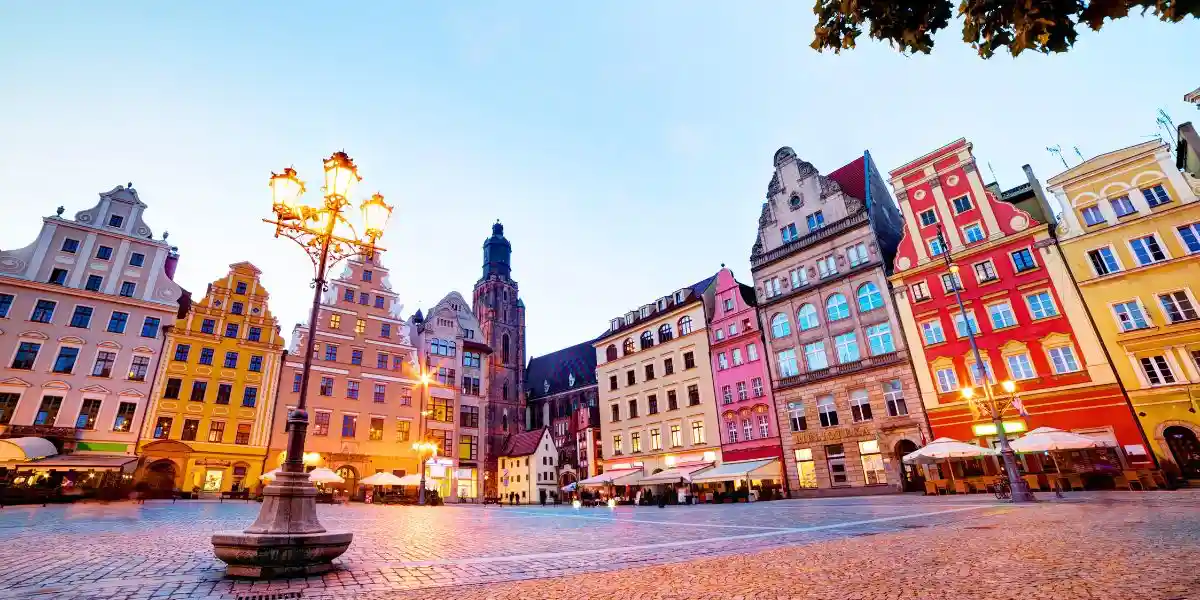
Poland remains the champion of the European “North.” Cities like Wroclaw and Gdansk provide world-class infrastructure and high-speed rail connections. I found that a luxury meal in Warsaw costs less than a soggy sandwich in London.
Daily Budget Comparison 2026
The following table reflects the actual daily spend for a budget traveller staying in high-quality hostels and eating two local meals per day.
| City | Accommodation (Hostel) | Food & Drink | Local Transit | Total Daily Spend |
| London, UK | $65 | $50 | $15 | $130 |
| Paris, France | $70 | $55 | $12 | $137 |
| Krakow, Poland | $22 | $18 | $4 | $44 |
| Tirana, Albania | $18 | $15 | $3 | $36 |
| Lisbon, Portugal | $35 | $30 | $7 | $72 |
| Sofia, Bulgaria | $20 | $16 | $4 | $40 |
The High-Risk Budget Injection
Travellers frequently reach a point where their savings fall short of their ambitions. Some turn to credit card points. Others seek ways to augment their liquid cash before departure. High-risk methods exist for those who understand the math of incentives. I recently analysed how specific digital platforms offer sign-up incentives that technically provide positive expected value if played with total discipline. If you need to evaluate these incentives to potentially pad your travel fund, Click here to read about the current best online casino bonus codes. Treat these tools as financial instruments, not entertainment. Use the house’s money to pay for your Eurail pass, then exit the platform immediately.
Transport: The Great Rail vs. Air Debate
The Eurail Global Pass offers massive flexibility, but it often drains more money than it saves. In 2026, high-speed lines in France and Italy require mandatory seat reservations costing $10 to $25 per leg. These hidden fees negate the value of the pass. I suggest a simple rule. If your trip involves three or fewer long-distance legs, buy point-to-point tickets exactly 60 days in advance.
FlixBus and BlaBlaCar dominate the low-end market. A bus from Prague to Berlin often costs $15, while the train demands $45. I prioritize the bus for journeys under five hours. It saves money and often provides better Wi-Fi.
Exploiting the New EU Luggage Laws
As of late 2025, new European Union regulations forced airlines to standardize carry-on luggage sizes. Most budget carriers now permit a 7kg hand luggage bag plus a small personal item for free. This change ended the era of the $60 “gate fee” for backpacks. To maximize this, I use a 40-liter compression pack. I wear my heaviest clothes, including hiking boots and a winter jacket, through security. This tactic clears space for ten days of clothing inside a bag that fits the free dimensions.
The Gastronomy Hack: Milk Bars and Markets
Restaurants in tourist zones serve mediocre food at inflated prices. Poland offers a specific solution: the Bar Mleczny (Milk Bar). These government-subsidized cafeterias serve hearty traditional meals for $5. Look for workers and students lining up outside nondescript doorways.
In Southern Europe, I eat my main meal at lunch. Most restaurants in Portugal and Spain offer a Menu del Dia. This three-course meal includes wine and coffee for roughly $12 to $15. The same dinner at the same restaurant costs $35.
- Avoid Global ATMs: Machines from companies like Euronet charge 10% to 15% in hidden conversion fees. Use only official bank ATMs attached to a physical building.
- Decline DCC: When a card reader asks to charge you in US Dollars, always select the local currency. Your home bank provides a better exchange rate than the merchant.
- Carry a Student ID: Even if you graduated years ago, an ISIC card or an old university ID often secures 50% discounts at major museums like the Louvre or the Uffizi.
- Book Directly: Third-party booking sites take a 15% cut. I find the best price on a search engine, then call or email the hostel directly. They usually match the price and throw in a free breakfast.
- Night Trains: A sleeper car from Vienna to Venice serves as both transportation and a hotel night. This move saves $80 on accommodation.
The Logistics of Connectivity
Roaming charges from US carriers represent a complete scam. Upon landing, I immediately install an eSIM via an app like Airalo or Holafly. In 2026, 10GB of data across the entire EU costs less than $20. Comparing this to the $10-per-day “International Pass” from American providers shows a savings of $120 over a two-week trip.
Scam Prevention and Safety
Budget travellers often fall prey to “free” items. In Rome or Paris, men frequently offer “friendship bracelets” or roses. Once the item touches your hand, they demand payment. I walk past these individuals without making eye contact.
Public toilets in major cities like Amsterdam or Munich now cost $1 per visit. I use the facilities in museums, galleries, or large department stores like El Corte Ingles to avoid this constant tax.
The Packing List for the Minimalist
- Solid Toiletries: Shampoo bars and solid deodorant bypass the liquid restrictions at airport security.
- Universal Adapter: One unit with multiple USB-C ports replaces four separate plugs.
- Microfiber Towel: It dries in twenty minutes and takes up the space of a pair of socks.
- Refillable Water Bottle: Europe offers some of the cleanest tap water on the planet. Paying $3 for a plastic bottle at a kiosk represents a failure of planning.
Image credit – dreamstime