
PayPal vs Credit Cards for Online Casinos: A CasinoWizard Comparison

PayPal and credit cards remain two of the most common options, yet they operate in very different ways once money enters a casino system.
Those differences matter more than many players expect. Speed, data exposure, dispute handling and limits all affect whether a payment method feels smooth or restrictive over time. CasinoWizard compares PayPal and credit cards not by popularity, but by how each method behaves under real playing conditions.
How PayPal Works Inside Online Casinos
This payment method operates as a digital wallet that sits between the player and the gambling platform. That structure explains why PayPal casinos often appeal to those who value smooth payments over complex checkout systems.
Wallet-Based Deposits and Instant Funding
PayPal deposits draw funds from a wallet balance or a linked bank account or card. Once approved, the amount appears in the casino balance almost instantly. No card numbers or banking details pass through the casino cashier, which reduces setup time and lowers friction for repeat visits.

Withdrawal Flow and Payout Routing
Withdrawals usually return to the same PayPal wallet used for deposits. Processing times depend on casino approval, yet the transfer itself completes quickly once released. Funds then sit in a familiar account already used for everyday payments.
How Credit Cards Work Inside Online Casinos
Credit card payments place casinos inside the traditional banking framework, which brings established rules and risk controls into every transaction. That framework affects how accounts get reviewed and how operators manage payment-related exposure.
Authorisation, Processing and Clearing
Before a deposit completes, the issuing bank confirms that the card and available credit meet its internal checks. After approval, the payment follows card network rules, and withdrawals may return to the card as refunds up to the deposited amount, with remaining payouts routed through another method.
Chargebacks and Dispute Rules
Card payments allow chargebacks through banks, which casinos treat as high risk. Disputes can trigger account reviews or payment restrictions. That risk profile explains why some operators limit card withdrawals or apply stricter verification rules.
Speed Comparison: Deposits and Withdrawals
Differences become most noticeable once money moves out of the casino. Deposits look similar at first glance, but withdrawal handling and settlement reveal how each method performs in practice.
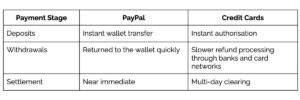
PayPal keeps the payment cycle contained within a single wallet, which shortens the distance between casino approval and usable funds. Credit cards depend on bank and network rules, which adds extra steps even when the initial transaction appears fast.
Security and Data Exposure Differences
Security influences confidence more than bonus size for many players. PayPal and cards approach protection in different ways.
Where Personal and Financial Data Lives
PayPal shields card and bank details from casinos. The platform handles sensitive data internally, which limits exposure. Credit cards pass details directly to payment processors, which increases the number of systems involved.
Fraud, Disputes and Account Lock Risk
Dispute handling differs sharply between wallet-based systems and card payments. Issues raised through PayPal remain contained within the wallet environment, while card disputes escalate through banks and can lead to frozen funds or temporary account restrictions.
How Each Method Feels to Casual vs High-Volume Players

Payment structure shapes how slot play and other casino sessions feel. PayPal suits casual play, with modest deposits, easy exits and a wallet-based setup that keeps spending contained and sessions flexible.
Credit cards fit high-volume play more closely. Higher limits and direct banking access support larger transactions, alongside stricter oversight and formal checks. In practice, PayPal prioritises ease and control, while credit cards focus on scale and traditional banking access.
Fees, Limits and Hidden Costs
PayPal deposits usually arrive without direct fees, though currency conversion can add cost. Withdrawal limits depend on casino policy and wallet verification status. Credit cards may trigger cash advance fees, foreign transaction charges or blocked withdrawals depending on the bank.
Limits also differ. PayPal caps daily transfers, which suits budget control. Cards often allow higher deposit ceilings, which attracts high-volume play.
What CasinoWizard Looks For in Payment Fairness
CasinoWizard evaluates payment methods through consistency, transparency and player control. One principle guides that approach, summed up neatly by respected author Sami Kurvinen: “A fair payment system never competes with the game for attention; it simply works when the player expects it to”.
PayPal and credit cards both serve a purpose, though they meet different expectations. Wallet-based flow supports speed and separation, while card networks prioritise scale and oversight. Fair systems recognise those differences and allow players to choose freely without hidden penalties or shifting rules.
Image credit- UnSplash, Pixabay, Dreamstime