Hunza Is Better at Village Speed
Hunza needs a week. The valley changes between central Hunza and the villages of Gojal farther north, with differences in language, food, architecture and altitude. Staying in more than one place allows those changes to become clear.
Visitors researching flights to Pakistan often plan to reach Gilgit by air and continue towards Hunza by road. Mountain flights can be delayed or cancelled with little notice, so a slow itinerary is useful before the valley is even reached. Spare days prevent one weather disruption from dismantling the entire trip.
Karimabad deserves three mornings
Karimabad is the usual base for central Hunza. Many travellers give it one night, visit Baltit Fort and leave for Attabad Lake after breakfast. Three nights produce a different experience.
Baltit Fort sits above the town on an old settlement site, reached by a steep walk through narrow lanes. Its timber, stone and mud-plaster construction reflects connections with other parts of the Karakoram and neighbouring regions. A guided visit gives the rooms and courtyards meaning that cannot be gathered from the terrace view alone.
Altit Fort, lower in the valley, has its own character. The restored royal garden and older settlement around the fort are worth time apart from Baltit. Altit also provides a useful starting point for understanding how tourism and conservation projects have changed employment in the area, including opportunities for local women.
The hours between these monuments are equally useful. Karimabad’s shops sell dried apricots, walnuts, mulberry products and apricot kernel oil. Buying directly from a small producer allows time to ask where the fruit was grown and how it was dried. It also keeps more of the sale within the valley.
Morning is best for walking. The air is cooler, streets are quieter and the light reaches across the slopes before afternoon haze gathers. By the third morning, the uphill route that felt demanding on arrival begins to feel like part of the town.
A village meal says more than a hotel buffet
Hunza’s food developed around what could be grown, stored and carried through long winters. Wheat, buckwheat, apricots, dairy products and meat appear in combinations designed for mountain life.
Chapshuro is one of the most recognisable dishes. Dough is filled with seasoned meat and onion, then baked into a flat, enclosed pie. It is filling enough to serve as a meal rather than a snack.
Dowdo is a noodle soup commonly prepared with meat and vegetables. It suits cold evenings, especially after a day outside. Mamtu, steamed dumplings filled with meat and onion, reflects wider Central Asian connections across the region.
Local breads are often served with butter, cheese or apricot oil. Diram fitti, a sweet bread associated with Hunza, uses sprouted wheat flour and is commonly eaten with butter or oil. Recipes vary between households and villages, which is one reason a homestay meal can be more revealing than a large restaurant menu.
A village kitchen may not offer ten choices. Guests are often served what is fresh, seasonal and practical for the household. Dietary needs should be discussed in advance, particularly for vegetarians, vegans or anyone with nut and dairy allergies.
Paying fairly matters. Home-cooked meals take time, fuel and ingredients, even when hospitality makes the exchange feel informal. Visitors should not treat an invitation as a way to avoid paying for dinner.
Attabad Lake should not be reduced to a boat ride
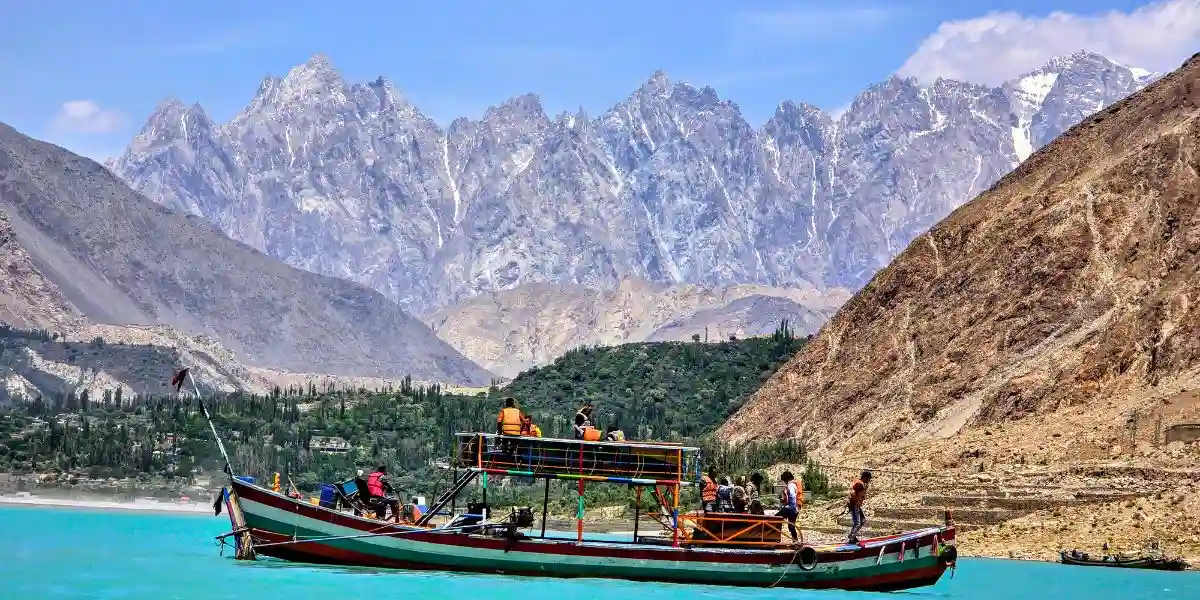
Attabad Lake was formed after a landslide in 2010 blocked the Hunza River, flooding villages and displacing families. Its blue water is now one of the most photographed sights in northern Pakistan, but the lake began as a disaster rather than a purpose-built attraction.
Boating, lakeside cafés and hotels have turned it into a major tourism stop. That activity provides income, yet rapid development has also put pressure on water, waste systems and the shoreline.
In 2025, authorities announced restrictions on new hotel construction around several northern lakes following concerns about unregulated building and wastewater. Attabad is a source of freshwater as well as a tourism asset, so where a hotel sends its sewage is more significant than whether the rooms face the water.
A responsible stay requires questions. Does the property treat wastewater? Does it refill drinking bottles? How does it dispose of rubbish? Marketing language about nature means little if a hotel relies on disposable plastic and sends untreated waste towards the lake.
Spending one night nearby gives the site time. The water changes colour with the light, boat traffic slows in the evening and the scale of the surrounding slopes becomes clearer after the day visitors leave.
Gulmit works as a base rather than a stop
Gulmit is often visited between Attabad Lake and Passu, but its old houses, fields and community spaces justify a longer stay. It is one of the main settlements of Upper Hunza, also known as Gojal.
The village is walkable if the altitude and weather are manageable. Irrigation channels run between fields, traditional houses sit beside newer buildings and views open towards the surrounding peaks. A local guide can explain how water is distributed and how farming continues in a dry mountain environment.
Music is an important part of Wakhi culture in Gojal, although visitors should seek organised performances or genuine invitations rather than asking residents to put on a private display. The same applies to traditional clothing. Cultural life is not a prop included with a hotel booking.
Gulmit also gives travellers a chance to spend money away from the busiest stretch of Karimabad. Guesthouses, cafés, drivers and guides based in the village benefit directly when visitors stay overnight instead of passing through for an hour.
Two nights leave room for a village walk, a meal prepared locally and an unhurried day towards Passu. They also provide flexibility if weather closes a trail or makes road travel uncomfortable.
Passu is more than its cones
The pointed Passu Cones are visible from the highway long before the village is reached. Most vehicles stop at the roadside viewpoint, take several photographs and continue north.
The village itself is quieter. Small fields sit beneath immense rock and ice, while the Passu and Batura glaciers lie nearby. Walks in this area range from short village routes to serious glacier and trekking excursions, so local guidance is essential.
The Hussaini suspension bridge is another popular stop. Photographs make the crossing look like a casual challenge, but gaps between the planks, wind and movement over the river can make it uncomfortable. Visitors should follow local instructions and turn back if conditions or confidence make the crossing unsafe.
No photograph requires anyone to block the bridge, fly a drone close to residents or pressure another traveller to move faster. Drones may also be restricted around sensitive locations, so permission should be checked rather than assumed.
Longer walks need an experienced guide, suitable footwear and a realistic assessment of fitness. Mountain weather can alter quickly, and mobile reception is not reliable everywhere. Travellers should avoid trekking alone and confirm whether any route requires a permit.
Slow travel still needs a flexible exit
A week in Hunza does not remove the practical risks of mountain travel. Landslides, flash floods and glacial lake outburst floods can close roads with little warning. Flight schedules at Gilgit may change, while sections of the wider Karakoram Highway can be affected by official travel advice.
Foreign visitors should check current government guidance, road conditions and registration requirements before travelling. Insurance needs to cover the complete route and any walking activities planned. A reputable local operator can help with changing transport arrangements, but no company can guarantee that a mountain road will remain open.
The final night should not be scheduled immediately before an international departure from Islamabad. Keeping a buffer day protects the booking and removes pressure on drivers to continue in poor conditions.
Hunza rewards that flexibility. A missed viewpoint is soon replaced by an extra morning in Karimabad, tea in Gulmit or another walk through Passu. At village speed, delays stop feeling like wasted time and become part of the reason to stay.
By L Gonsales
Image credit – Pexels